Temu Shipping Times, Explained: What Handling and Transit Actually Mean
By Stash by TipidNation · June 24, 2026 · 4 min read
Most “where’s my order” frustration with Temu comes down to one thing: shoppers read the delivery estimate as one number when it’s actually two stacked on top of each other. Knowing the difference changes what you should expect, and when it’s actually worth worrying.
Handling Time Is Not Transit Time
Handling time is how long the seller takes to pack and hand the order to a carrier, typically one to three days. Transit time starts only after that handoff, and it’s the actual travel time from warehouse to your door. When Temu shows a delivery window, it’s already combined both numbers, but a lot of shoppers only register the bigger transit figure and assume the clock started the moment they paid.
Why Transit Time Swings So Much by Country
Transit time is where the real variation shows up, commonly seven to twenty days, and the spread comes down to distance from the nearest fulfillment hub and how much customs processing your country requires. Countries with an established Temu warehouse presence tend to see the shorter end of that range. Countries further from major shipping lanes, or with more involved customs procedures, land on the longer end. This isn’t random, it’s routing.
Why Newer Markets See Longer Windows
If your country’s Temu storefront is newer, shipping infrastructure there is often still catching up to demand, which can stretch transit time compared to markets Temu has served longer. That’s the same market-maturity effect that shows up in why Temu coupon values differ by country, it’s not a reflection of whether your order is being handled properly. It tends to shorten over time as a market matures and more regional routing gets added.
What Actually Slows Orders Down
Beyond the baseline estimate, a few things reliably add days: customs holds, which are more common on higher-value orders or restricted item categories; seasonal volume around major sale events like Black Friday and the Christmas sale, when carrier networks are handling more parcels than usual; and address or delivery-instruction errors at checkout, which is the one variable that’s actually on the shopper’s end. None of these mean something went wrong, they’re the normal friction of an international supply chain, and it’s a separate question entirely from whether Temu is legit in the first place.
Reading a Delivery Estimate Correctly
Treat the number Temu shows at checkout as a window, not a promise, and check the tracking link if you’re past the high end of that window rather than assuming the order is lost. A coupon code applied to your order doesn’t change any of this, bundle credit affects your total, not which shipping lane your package takes.
Questions Worth Answering
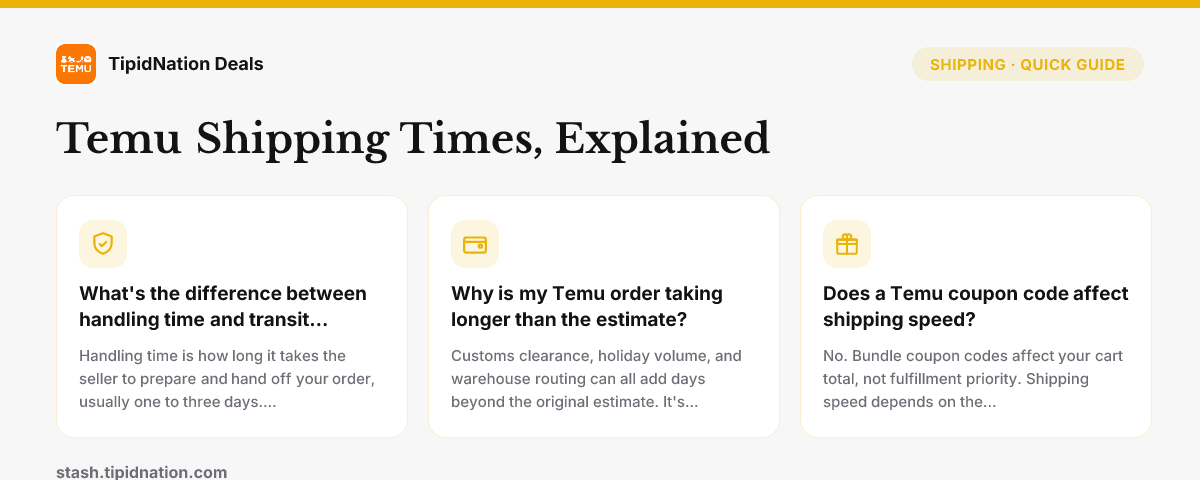
Handling time is how long it takes the seller to prepare and hand off your order, usually one to three days. Transit time is how long the package travels after that, typically seven to twenty days depending on your country. The total delivery estimate is both added together.
Customs clearance, holiday volume, and warehouse routing can all add days beyond the original estimate. It's worth checking the tracking page directly rather than assuming the initial estimate is a guarantee.
No. Bundle coupon codes affect your cart total, not fulfillment priority. Shipping speed depends on the shipping method selected and your delivery country, same as any order without a code applied.
Shipping terms are noted on every country page alongside the current bundle offer, for example Philippines or United Kingdom. If you’re timing a purchase around a sale window, check the Sale Calendar first, volume spikes there are the most common reason transit estimates stretch.