Temu Account Suspended: Common Causes and How to Fix It
By Stash by TipidNation · October 8, 2026 · 5 min read
Short answer: a Temu suspension is almost always triggered by an automated risk flag, not a manual decision, and most come from one of a handful of repeatable causes. Knowing which one applies to you is the fastest way to get it actually reviewed instead of stuck.
Why Accounts Get Suspended in the First Place
Temu runs the same kind of automated risk-detection layer that most large marketplaces use, scanning account activity for patterns that resemble fraud, abuse, or policy violations. That system doesn’t wait for a human to confirm a hunch, it flags first and holds the account while a review catches up, which is why a suspension can land with no warning and no specific explanation in the moment. The intent isn’t to punish ordinary shoppers, it’s a blunt tool tuned to catch a much smaller number of bad-faith accounts, and legitimate accounts get caught in that net more often than the system would ideally allow.
The Most Common Triggers
A handful of patterns show up again and again behind suspension reports. A sudden login from a new device or location, especially right after a password change, reads as a possible account takeover even when it’s just you on a new phone. A payment method that gets declined repeatedly or disputed through your bank can flag the account for a fraud review, separate from whatever happened with the order itself. A return or refund pattern that looks heavier than typical shopping behavior, several returns in a short window, can also trigger a policy-abuse flag, which connects to the same mechanics covered in how Temu refunds actually work. None of these triggers require any wrongdoing, they’re pattern-matching, not judgment calls.
How This Is Different From an Outage
A suspension and a site-wide outage can look identical from the login screen, both end in an error and a dead end. The distinction is scope: an outage fails for everyone at once and clears on its own, while a suspension is specific to your account and won’t resolve just by waiting or refreshing. If you’re not sure which one you’re looking at, the outage-versus-account-issue breakdown walks through the exact signals that separate the two before you assume either explanation.
What Actually Gets a Suspension Reviewed
Contacting support directly, rather than retrying the login over and over, is the step that moves a suspended account forward, and knowing which channel actually reaches a person beats guessing from the help center’s front page. Have your order history, the email or phone number on the account, and a short, factual description of what you were doing right before the lockout ready before you reach out, since that’s what a reviewer actually needs to clear a false flag quickly. Vague appeals take longer than specific ones. If the suspension followed a payment dispute, resolving that dispute directly with your bank or card issuer first often clears the underlying trigger faster than anything support can do on their end alone.
What Won’t Help
Opening a second account to keep shopping while the first is under review tends to backfire, since risk systems are built to notice exactly that pattern and can treat it as confirmation rather than a workaround. Repeated login attempts from the same flagged session don’t help either, and can extend how long the hold stays active. The slower, more direct route through support is also the one that actually resolves the account rather than adding a second complication on top of the first.
Questions Worth Answering
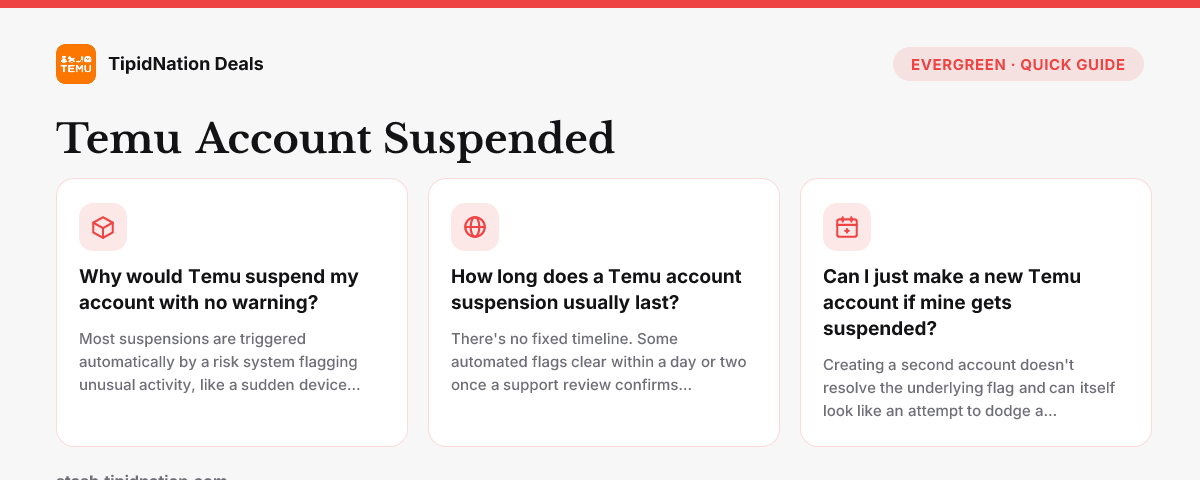
Most suspensions are triggered automatically by a risk system flagging unusual activity, like a sudden device change, a payment method that failed a fraud check, or a return pattern that looks like abuse, rather than a human reviewing the account first. The lack of warning is normal for an automated flag, not a sign the suspension is permanent or unappealable.
There's no fixed timeline. Some automated flags clear within a day or two once a support review confirms nothing is wrong. Cases involving a payment dispute or a flagged return pattern can take longer, since those require an actual person to look at the account history before lifting the hold.
Creating a second account doesn't resolve the underlying flag and can itself look like an attempt to dodge a suspension, which risk systems are specifically built to catch. Working through support on the original account is slower but is the path that actually gets the issue looked at rather than compounding it.
A suspension doesn’t change what’s waiting once an account is cleared, the bundle coupon offer is still live on the United States country page and every other market Stash covers. For the redemption flow end to end, see how Temu coupon codes work, and broader questions beyond account issues are covered in the Temu Coupon Code FAQ.