Temu vs AliExpress: Which Ships Faster in 2026
By Stash by TipidNation · August 10, 2026 · 5 min read
Both platforms ship the majority of orders from overseas, so “which is faster” isn’t really the right question. The better one is: which platform’s routing model favors your specific order, because Temu and AliExpress solve the shipping problem in genuinely different ways, not just at different speeds.
Two Different Fulfillment Models
AliExpress is built as a marketplace of independent sellers, each handling their own inventory, packing, and carrier choice. That means transit time on AliExpress can vary enormously between two nearly identical listings, one seller ships same-day from a regional hub, another only packs orders twice a week. Temu runs a more centralized fulfillment model, with orders more consistently routed through its own warehouse network, which is the same handling-time-versus-transit-time split we cover in Temu shipping times, explained. Centralization doesn’t automatically mean faster, but it does mean more predictable, and predictability is often what shoppers actually want when they ask “which one is faster” in the first place.
Where Temu Tends to Pull Ahead
Because Temu’s fulfillment is more standardized, its delivery estimates are usually tighter and easier to trust at checkout. If you’re ordering a popular category, home goods, accessories, basics, Temu’s routing has had more volume to optimize around, and estimates tend to hold up. That consistency is part of why Temu’s country-by-country model works at all, the same reason bundle terms are calibrated per market rather than copied across borders, something we go deeper on in why Temu coupon values differ by country. A tighter estimate also means fewer surprises if you’re timing a purchase around a specific date, a gift deadline, a move, an event, where “probably this week” isn’t good enough.
Where AliExpress Can Actually Win
AliExpress isn’t automatically slower, it’s just less consistent, and that cuts both ways. A seller with local or regional stock can beat Temu’s estimate outright, especially for niche or specialty items where Temu’s catalog is thinner. The tradeoff is you have to actually check: seller rating, stated handling time, and shipping method on that specific listing, rather than trusting a platform-wide average. Shoppers who compare listings before buying tend to do better on AliExpress than shoppers who don’t, which isn’t true to the same degree on Temu, where routing is closer to standardized regardless of seller. AliExpress also tends to offer more shipping method choices on a single listing, from a slow free option to a paid expedited one, which gives shoppers a lever Temu’s flatter shipping structure doesn’t always provide.
Customs and Country Matter More Than the Platform
For both platforms, the country your order ships to affects transit time more than which one you picked. Countries with established fulfillment presence, more shipping lanes, and simpler customs processing see shorter windows on either site, while newer or more distant markets see longer ones on both. That’s worth checking directly on your country page, since bundle terms and market maturity are both listed alongside the current offer, for example the United Kingdom or Philippines. A shopper in a market both platforms have served for years will usually see a smaller gap between them than a shopper in a newer market, where routing infrastructure is still catching up on both sides.
What This Means for Order Timing
If you’re shopping around a sale event, the platform gap tends to widen rather than close, since both networks see volume spikes that stretch handling and transit alike. Building in extra buffer around a major date, like the 11.11 sale or year-end shopping season, is worth doing regardless of which platform you choose, and it matters more than picking the theoretically faster one. The same logic applies to gift-timing purchases generally: order earlier than the stated estimate suggests you need to, since that estimate reflects normal volume, not sale-week volume, on either platform.
The Honest Comparison
If predictability matters more to you than squeezing out the fastest possible listing, Temu’s centralized routing is the safer default. If you’re chasing a specific niche item and are willing to vet the seller, AliExpress can beat it on a case-by-case basis. Neither platform is universally faster, and a coupon site claiming otherwise is oversimplifying a routing question into a marketing line. For a broader look at how Temu stacks up against other marketplaces beyond just shipping, see Temu vs Shein and Amazon.
Questions Worth Answering
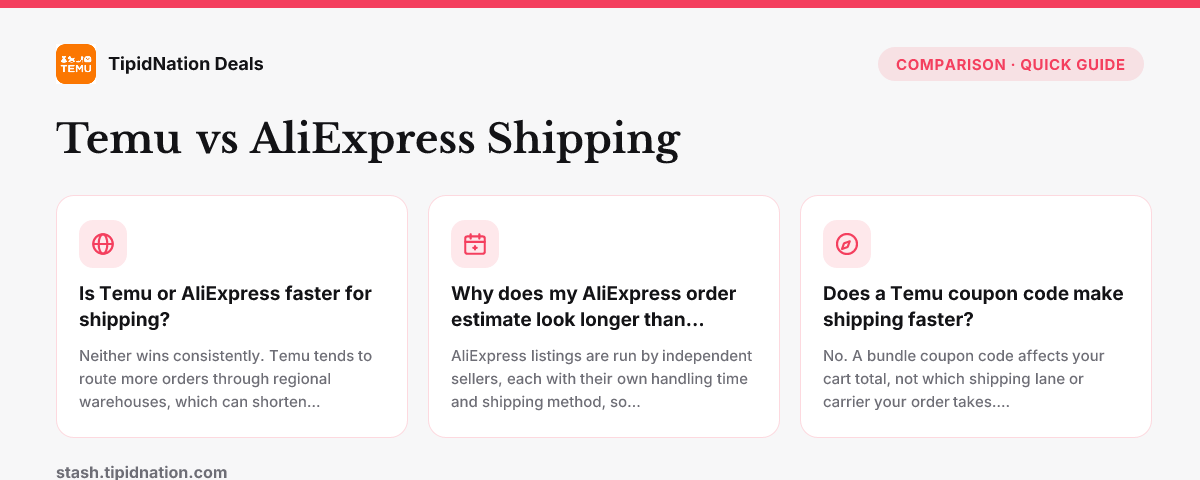
Neither wins consistently. Temu tends to route more orders through regional warehouses, which can shorten transit for popular categories, while AliExpress often ships directly from individual sellers, which varies widely by seller and item. Check the estimate on the specific listing rather than assuming one platform is always quicker.
AliExpress listings are run by independent sellers, each with their own handling time and shipping method, so estimates swing more from item to item. Temu's fulfillment is more centralized, which tends to produce a tighter, more predictable window.
No. A bundle coupon code affects your cart total, not which shipping lane or carrier your order takes. Shipping speed depends only on the shipping method selected and your delivery country.
Check your country’s current bundle offer on the country page, or browse the full list on the sitemap if you’re comparing markets beyond your own.