Temu Size Charts: Why Sizes Run Different by Category
By Stash by TipidNation · October 10, 2026 · 5 min read
Short answer: Temu doesn’t run one universal size chart, each seller attaches their own, usually built around whatever factory pattern or regional sizing convention they already use. A label like “M” is just a name for a row in that specific chart, not a fixed measurement, which is why the same letter can mean two different things on two different listings.
There’s No Single Temu Size Standard
Unlike a single-brand retailer that sizes every product against one master chart, Temu’s catalog is built from thousands of independent sellers, each shipping their own goods under their own production specs. A hoodie seller and a dress seller aren’t drawing from the same pattern library, and even two sellers in the same category rarely share one either. The platform doesn’t normalize this centrally, it displays whatever chart each listing uploads. That’s less an oversight than a direct consequence of how marketplace listings differ from Temu’s own warehouse-fulfilled stock: the warehouse side has more consistency built in, third-party marketplace listings carry whatever sizing habits their seller brought with them.
Why Regional Sizing Conventions Collide
A lot of the mismatch traces back to geography rather than carelessness. Sellers sourcing from different manufacturing regions often default to the sizing convention local to that factory, one chart built around a size system common in one region reads noticeably smaller or larger at the same label than a chart built around a different region’s convention. Add in that some categories (outerwear, fitted tops) run tighter specs than others (loose dresses, elastic-waist bottoms) even within a single seller’s own catalog, and “my usual size” stops being a reliable shortcut the moment it’s applied across categories instead of within one.
Read the Chart in Measurements, Not the Label
The fix isn’t guessing better, it’s skipping the label entirely. Every size chart on Temu lists actual measurements, usually bust/chest, waist, hip, and length, in centimeters and inches side by side. Measuring the equivalent spot on a garment that already fits well and matching it against the chart’s numbers is slower than clicking “M” out of habit, but it’s the only step that actually accounts for a seller’s specific pattern instead of assuming it matches the last listing you ordered from. The same close-reading habit that pays off on a seller’s star rating applies here too, the chart is data worth a few extra seconds, not a formality to skip past on the way to checkout.
Reviews Are Where Fit Problems Actually Surface
A size chart tells you what a seller intends; reviews tell you whether buyers actually got that. Filtering reviews to look for fit-specific comments, “runs small,” “true to chart,” “order one size up,” is one of the few ways to catch a chart that’s technically accurate but misleading in practice, a seller rounding measurements more generously than the finished product delivers. It’s worth treating that signal the way any other review pattern gets checked before trusting it at face value: a handful of consistent fit complaints across unrelated reviewers is a real pattern, one outlier complaint usually isn’t.
If the Size Is Wrong, the Return Path Is the Same One
A sizing miss doesn’t fall outside Temu’s normal process, return policy applies the same way to a wrong size as it does to any other listing-level issue, running on the window and terms set for that specific item rather than a separate sizing exception. Picking the sizing-related reason when filing a return just routes the request correctly, it doesn’t change the timeline or add friction compared to any other return reason.
Questions Worth Answering
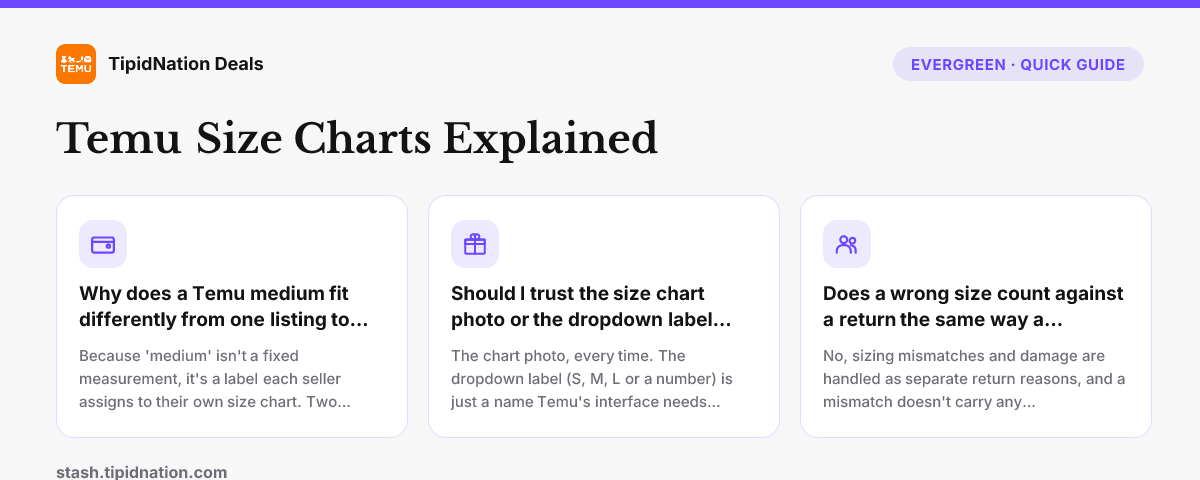
Because "medium" isn't a fixed measurement, it's a label each seller assigns to their own size chart. Two sellers making the same category of item can use different base patterns, different regional sizing conventions, and different amounts of ease, so the label lines up with different actual measurements on each listing.
The chart photo, every time. The dropdown label (S, M, L or a number) is just a name Temu's interface needs to let you select a variant, the chart is where the seller actually tells you what that name measures on their item. When the two disagree, which happens more than it should, the chart is the one that reflects the physical product.
No, sizing mismatches and damage are handled as separate return reasons, and a mismatch doesn't carry any extra penalty. The return still runs through the same per-listing window and process either way, the stated reason just helps route the request correctly.
None of this changes what’s on offer right now, the current bundle coupon is still live on the United States country page and every other market Stash covers. For the full redemption walkthrough, see how Temu coupon codes work, and broader questions beyond sizing are covered in the Temu Coupon Code FAQ.